Mindset

Thoughts on mindset, thinking patterns, and mental frameworks.

Anicca

I first learned about this word when I attended Vipassana back in 2016.

I don’t only remember it, but it’s ingrained in my head because it’s the word that’s used to break the hours-long meditation sessions that happen a couple times a day for 10 days. I began to yearn for it, especially when back pain becomes unbearable from sitting up straight, or there’s a mosquito right on my nose sucking out my blood, and we’re instructed to just observe. Observe our breathing. See how everything comes and goes.

Anicca means impermanence.

The word resonated with me so much I had it tattooed on my right forearm. When I learned that it is transliterated as “anicca” from Pali, I knew it’s going to be the name of our baby girl.

And here she is.

-

Nothing in life is permanent. Being aware and accepting this fact will only help us prepare, and face the things that will come and go.

It’s a belief that makes me balanced. It’s a belief I want to introduce to my kids and see if it’s going to resonate with them too.

Insecurity as a trigger to take action

/ Life , Mindset /

I used to see insecurity as a sign of weakness, something I should dispose. Lately though, I’ve been thinking about usefulness of negative emotions. Those must have serve for something since we still feel it despite generations of evolution, right?

Growth is one thing. We can’t grow stronger if we always feel good. If we feel secure all the time, we’d be complacent. There’s no incentive to change things. Insecurity is like a fever, it’s a symptom that something is wrong. I feel insecure because my body wants to tell me something. I think it works as a “signal” that I have something to improve on.

Try to understand: what is my body trying to telling me?

Do I need to improve my understanding of the world? Do I need to improve a particular skill? Do I need to prepare myself for something?

What actionable step can I take now?

I’ll try to figure out why, be completely honest with myself, and address it. It hits hard, but it also pushes me forward. The more issues I can resolve, the more confident I will be dealing with any issues that will come up, the more secure I become.

When I get insecure now, instead of brushing it out, I ask 1) What is this telling me? 2) What actionable step can I do? And then do it.

Nothing in excess

/ Life , Mindset /

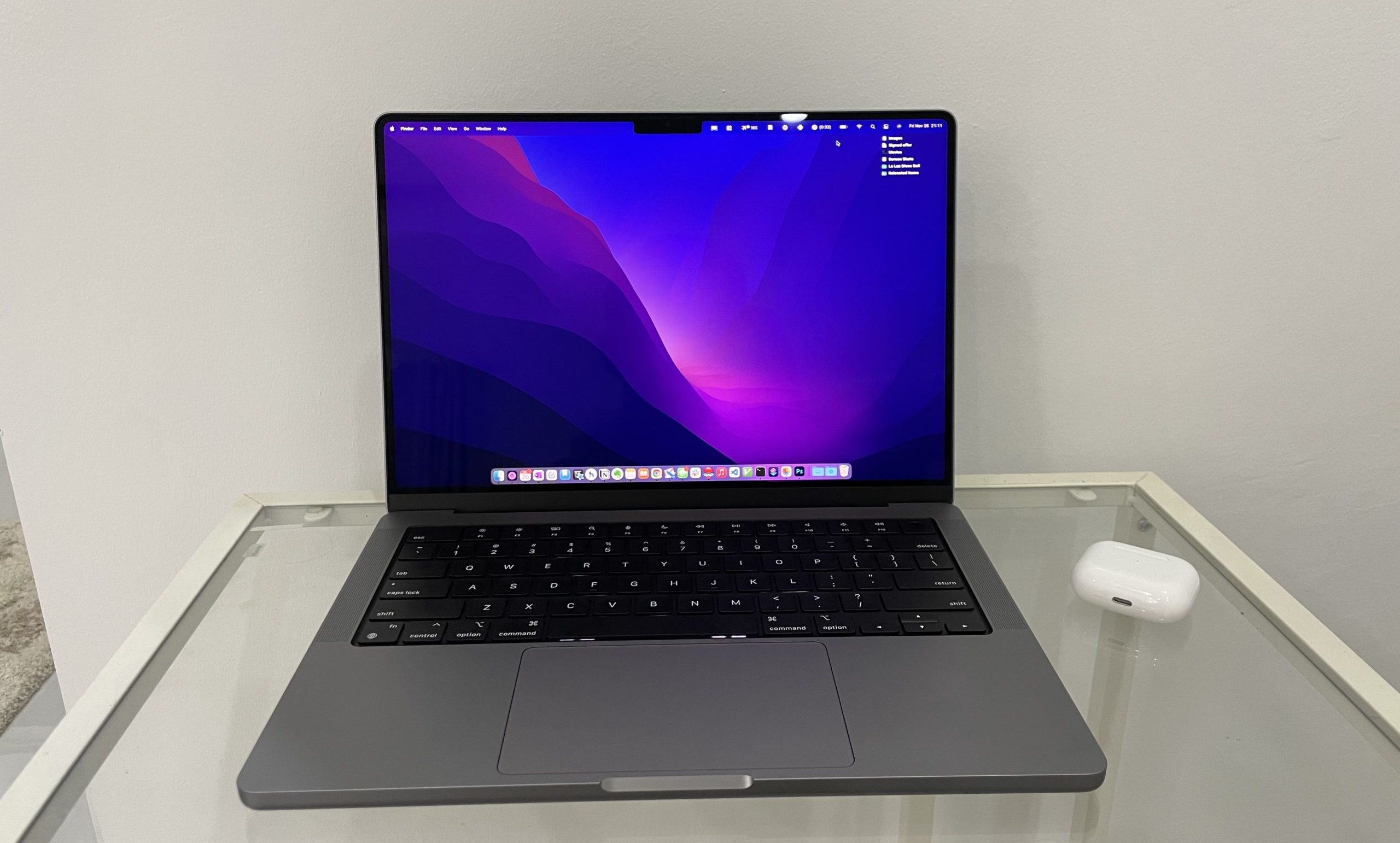
I recently got a new a job as a Cloud Engineer. Part of pre-onboarding was choosing my preferred equipment. The recommended machine for engineering roles was a MacBook Pro 13” 16gb 512gb with an AirPods Pro (or any equivalent). Since Intel-based MacBooks are getting phased-out, I opted for a MacBook Pro 14”.

Here’s where my issue surfaced. Even though I’m not the one paying for it, it still felt excessive. I already have a personal MacBook Air that’s half the cost and also good enough to do my role. My role requires ridiculously low computing power to be productive. When I got it, I wasn’t giddy or super excited as I should be. I felt some kind-of waste on adding another stuff to my life, when I already have something I can use. It literally sat on my desk for a full week before I started using it.

I wondered why:

  1. I like getting away with as minimum as I can - I think the optimal position to be in is just right in the middle. Not lacking, but also nothing in excess.
  2. Cheaper stuff requires less care and easy to replace - I get more excited with cheap electronics than most expensive ones. I like not having the best. Easily replaceable.
  3. Less emotional attachment to material things - If it breaks (which it will inevitably will), then it breaks. No hard feelings. I’ll just buy a new one. A line in Fight Club stuck with me when I start to feel I’m too invested in a particular thing: the things you own end up owning you.

This all made sense. But at the same time, I’m also wondering: Am I just rationalizing? Is it probably because I feel I don’t deserve the best?

I don’t know. I’m still figuring it out.

Make fast decisions

I used to procrastinate making decisions because I fear making the wrong one. I preferred to keep things hanging until somebody else takes action. Even for the smallest things like where should we eat? It gets worse the bigger the decision needs to be made.

Something I admire with Julie and her family is they make decisions amazingly fast. Action takes place soon after. I wanted this pace, so I identified what keeps me from deciding and address it.

I adopted these mindset to prevent option paralysis.

1. A wrong decision is better than no decision

Indecision leads to more indecision. With indecision, I am neither moving forward or backward. It stops momentum.

Things moving are better than things in undecided state.

2. Have a default answer

When asked where to eat, I usually say McDo. I don’t mind if it gets rejected or an alternative is presented. It’s way better than kahit saan (anywhere).

It’s the same with starting with a blank canvas. Starting from scratch is harder than editing something existing (at least for me).

3. I can change my mind (pwede mag-bago ng isip)

Yes, changing minds come at a cost. But the information you get by actually trying things is worth the cost (usually).

If it turns out I made a wrong decision, I’ll acknowledge the fault and change my mind.

This is the same strategy with digital marketing. I can’t really know what ad will work until I try it out. I don’t know and have no control of how people will react. I need to try and find out. Stop the ads that isn’t performing, and double down on those that’s working.

The more information I get, the better decisions I can make.

4. Avoid deciding on things I don’t even have control of

Let’s say I liked a particular job ad. The question I should be deciding on isn’t “Should I apply or not?” (the answer is always yes).

The only time I should decide in this scenario is if I’m at a point where a job is offered. Because in that position, I’m the one in control if I should accept or reject the offer.

Applying to the job alone doesn’t particularly change anything in my life. I shouldn’t think too much about it.

5. Letting go is an option too

If you can’t let it go, face it. If you can’t face it, let it go.

I have to be explicit in acknowledging I’m letting this go to let myself know that I’m really letting it go.

#

These strategies has served me well. I make fast decisions now. I’m action-oriented. And I enjoy moving things forward (or backward as long as things are moving).

Showing 4 of 5 posts