Systems

Systems thinking, processes, and meta-structure for life and work.

Want-to-do Saturdays
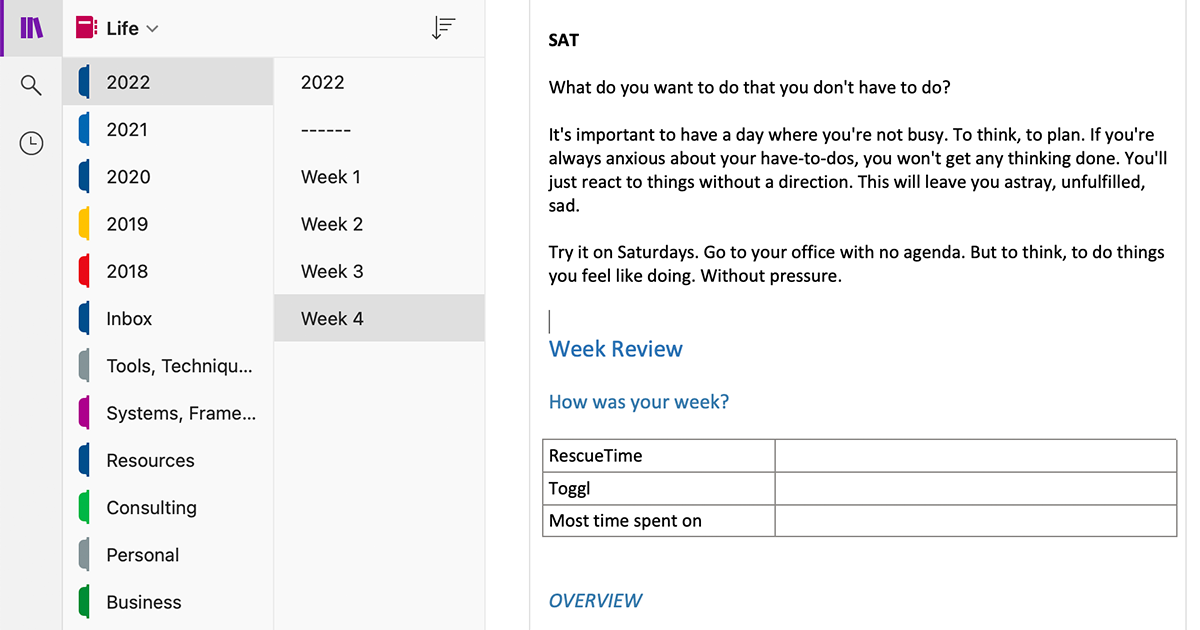
While doing a weekly review earlier today, I realized most of the stuff in my plans are for other people. I don’t have a day where I get to do things I’m naturally drawn to do. I fill all my days with things I have to do — which I actually don’t have an issue with, but leaves me unfulfilled.

Maybe this is also why when I share that I’m planning to try something new, I get a laugh instead of support. I can’t blame them. My want-to-dos only has been increasing. I should explicitly make time for it.

I’ll try this: I won’t plan work stuff on my Saturdays. I added a note in my weekly planner and calendar to remind me to do things for myself.

What do you want to do that you don’t have to do?

It’s important to have a day where you’re not busy. To think, to plan. If you’re always anxious about your have-to-dos, you won’t get any thinking done. You’ll just react to things without a direction. This will leave you astray, unfulfilled, sad.

Try it on Saturdays. Go to your office with no agenda. But to think, to do things you feel like doing. Without pressure.
Structure sets you free

I tried an unstructured life for a few months. No wake up time, no schedule, no commitment on deliverables. I was free to do anything I feel like doing. It seemed like the ideal state to be in, right?

I quickly realized though, this kind of lifestyle isn’t for me.

Day after day pass without anything meaningful happening. I had a list of things I wanted to do when I was super busy, but I have a lot of friction getting started.

My main issue turned out to be not having a structure.

I used to think being free means being able to do anything I want. It’s true. But what isn’t obvious is suddenly you have to decide on a lot things. Deciding on every single thing every day is mentally exhausting. “What am I going to do today? What time am I going to start? How much time should I spend on it?”

Pre-deciding is the key

A full-time job have a built-in structure. I wake up, take a shower, go to office. And in the office I have another set of routine to sit-down, identify what you need to do, do it until end of day.

This works because things are pre-decided for me. I didn’t have to think about it. I just have to follow it. That’s why it’s easier to do things.

I still don’t want the 9-5 lifestyle. It’s too rigid for me. What I end up copying is only pre-deciding on things. I start each week with a weekly planning where I check my calendar with upcoming commitments. I then list things I have to deliver within the week and arbitrarily put them any day depending on when it’s expected.

This significantly reduced the friction on how I start my day. Because it was pre-decided already. I just have to sit down and do it.

Structure sets me free in a way I don’t have to think of what I need to do everyday.

Getting back on track

No matter how much I plan, I still go through a phase where I just have zero motivation to do anything at all. I find myself wasting my day away. I know what I’m supposed to do, but I can’t find any energy to do it.

I used to wait it out until I get tired of being unproductive. However, that isn’t always possible. Especially being adult and having people depend on me. I have to find a way to get around whenever I’m in that state.

I have developed a checklist I follow that helps me back on track.

Getting back on track checklist

  1. Sort out finances
    • This is one of the easiest tasks because it involves a clear goal: checking bank accounts, credit cards, and cash. Having a clear understanding of my financial standing significantly reduces my anxiety.
  2. Brain dump - Write down everything that’s on your mind. You don’t have to act on it, but acknowledging its presence through writing helps you make sense of the thoughts in your mind.
    • Things I need to do, want to do, don’t want to do.
    • Things I’m trying to avoid thinking about.
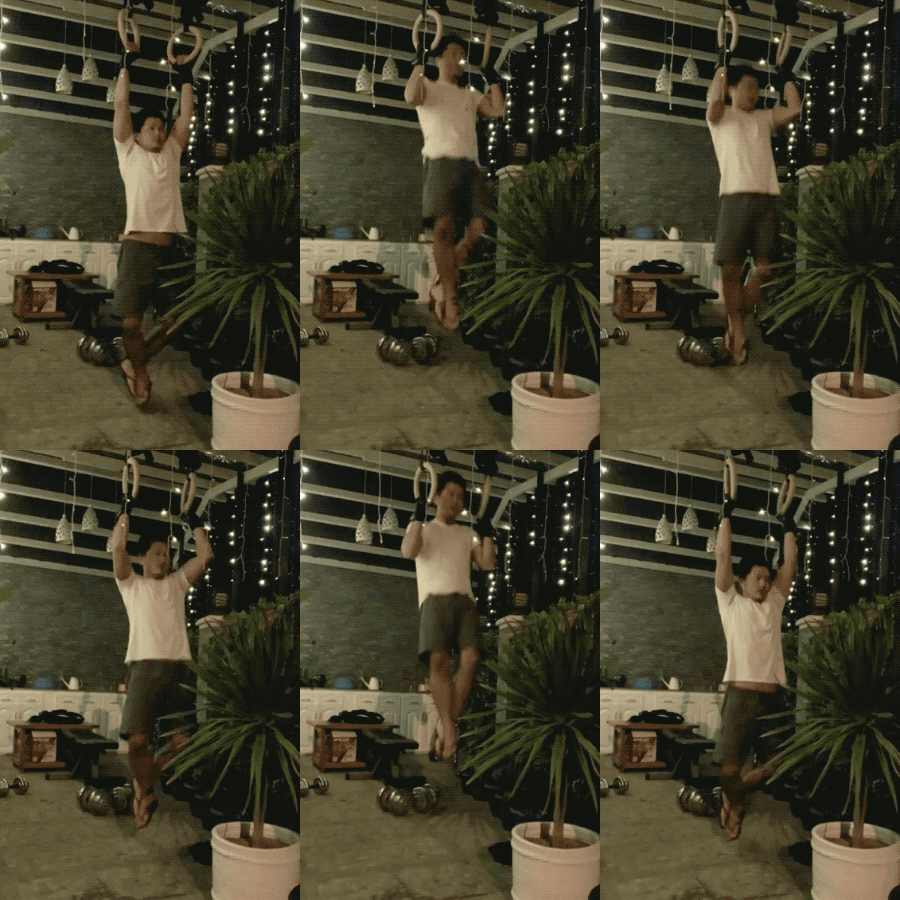
  3. Exercise - Walk, run, push up, pull up.
    • I don’t need to complete a full exercise routine; the primary goal is to elevate my heart rate. In some instances, the body influences the mind. When my heart beats fast from exercise, my mind shifts from low-energy to an excited state, as if my body dictates my emotional state.
  4. Eat the right food
    • Eating the right food is crucial because an unbalanced diet affects both mood and cognitive function. The mind and body are closely connected, so if I lack essential nutrients or consume too much junk food, it can lead to feeling off.
  5. Disconnect
    • We have become such experts at being always in touch, informed, connected. Now we must relearn how to be silent, disconnected, alone. - Alain de Botton
    • Food for the body is like information for the mind. If I constantly consume anxiety-inducing news, my body can’t help but feel anxious.
    • Pay attention to what I pay attention to.
    • Optimize on output.

It may not work out immediately, but with consistent effort day by day, there will come a point where I’ll surprise myself that I’m already doing fairly well.

Working out everyday as a keystone habit

I have been consistently working out for more than 80 days because of stay-at-home orders. This has been the habit that had the most impact in the quality of my life.

Keystone habit

A keystone habit is a habit that you can “attach” other habits to. It’s one habit that triggers a set of other good habits.

For working out, what happens after I’m done are:

  1. I shower - because I stink.
  2. I log my body composition (weight, body fat) - to track my progress, makes me a bit more aware with changes in my body.
  3. I eat good food, drink a lot of water - to address what the body composition scale suggests to improve.
  4. I take my vitamins.

There’s this idea that the better you take care of yourself, the better you’ll handle life. With my body getting used to physical stress, it makes me better prepared to handle unexpected stressors that will inevitably come my way.

Recent personal milestones

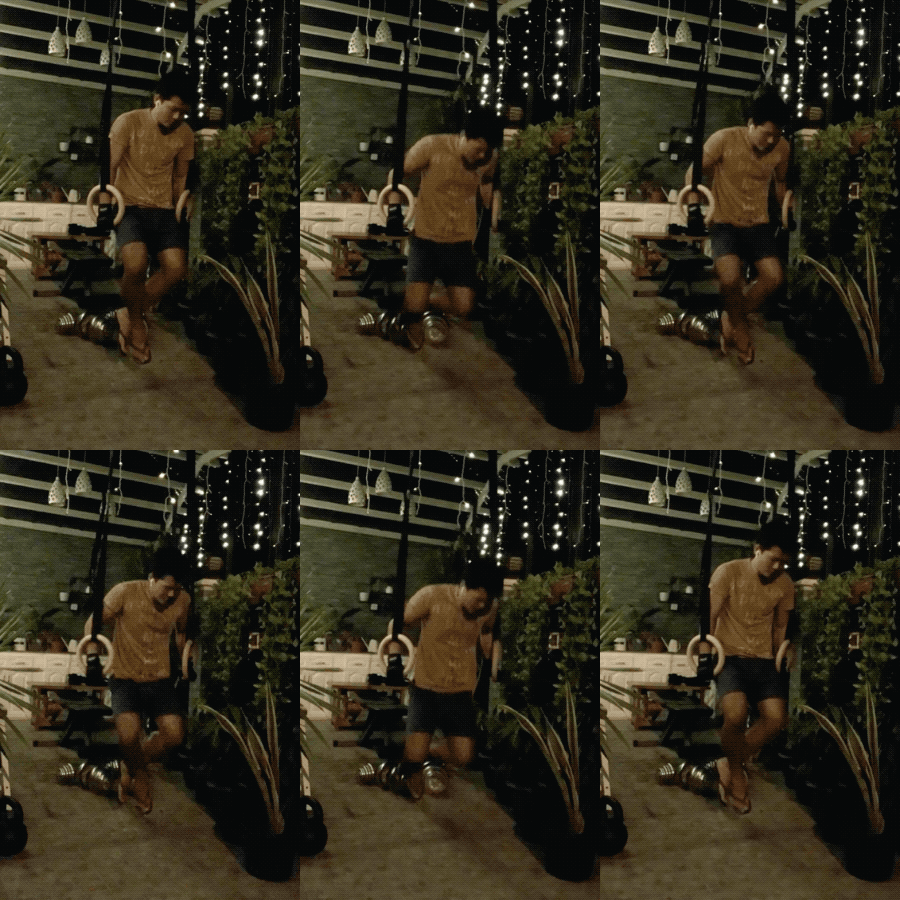
10 Dips

10 Pull-ups

Showing 4 of 7 posts