Work

Thoughts on work, career, productivity, and professional development.

Perpetual state of catching up

/ Work /

I’ve been in a state of catching up for a couple of months now. Months! It’s frustrating, to say the least. I can’t perform at my best, I don’t feel good about myself, which sinks me deeper.

Accept not performing at my best

I know it’s hard. I know it’s hard to be in this position. - Down By The Water, The Drums

One of the biggest source of frustration is not being proud of what I produce.

Nobody operates 100% all the time.

I think for now, I should accept that I’m not back at that level yet.

Focus on small wins.

Try to increase capacity

The effective way to increase my capacity is to exercise. A mix of interval and endurance training.
It feels counterintuitive to make time for this when my time and energy are already limited, but I distinctly remember when I was regularly doing it, my stress response was better. I’m more fight than flight.

TODO: Bring workout equipments from office to home to have less friction working out

Make fast decisions

With a lot on my plate, I often get stuck which to get started to. It does not matter which, flip a coin. Make fast decisions.

What’s the worse thing that could happen?

Sometimes the body has a disproportionate response to a situation.

A good way for reality check is to ask: what’s the worst thing that could happen?

I get fired. That’s it. It’s not the end of the world if it happens.

I have a solid emergency fund in place, and we haven’t fallen too deep into lifestyle inflation. My family can easily adjust if needed. Plus, there’s still strong demand for my specific skill set.

-

Anyway, I’m pretty sure this isn’t going to be forever (anicca). Hoping to catch-up soon!
Willingness to appear like a fool

/ Work /
Text manipulation question

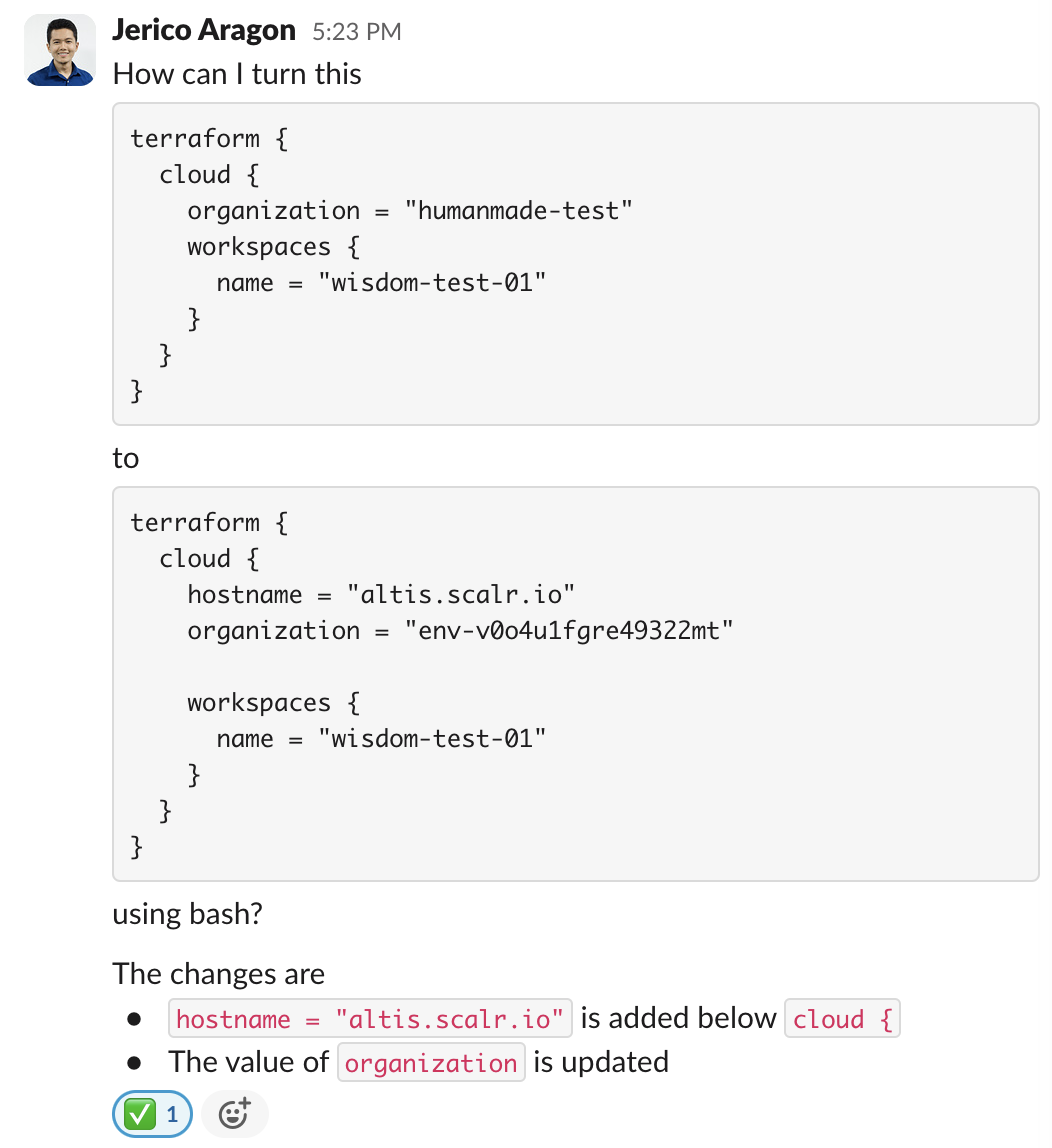
I’ve been working on a migration script for a couple of hours. I thought I’m done with the hard part of API calls, creating a new workspace, configuring the workspace to make it work.

The remaining task involves updating the configuration code itself to point to the new service provider. I didn’t anticipate spending hours on this since it’s a straightforward text manipulation. I expected this to be something I already knew how to do.

Previously, my approach was to exhaust all possible solutions on my own, often waiting until the last minute before asking. I don’t want to risk appearing like a fool.

Now, I’ve adopted a different approach. I ask for help proactively and provide updates on the steps I’m taking in the process. The team can respond if they knew the answer and if they got time.

It’s just a question! A single question could not possibly define my overall skill level.

The responses I got have been helpful, and I was able to complete my task.

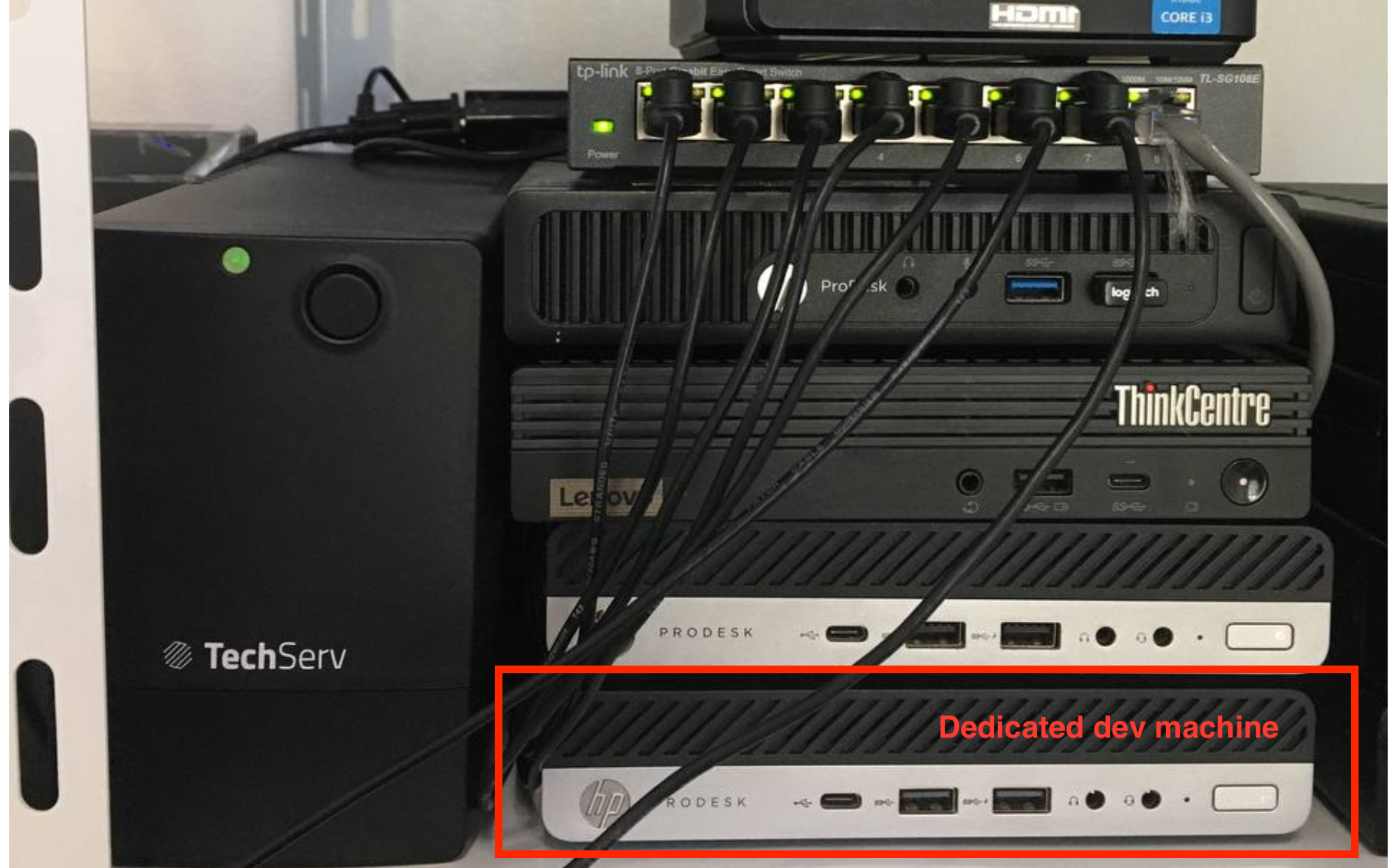
Why I have a separate workspace

/ Work /
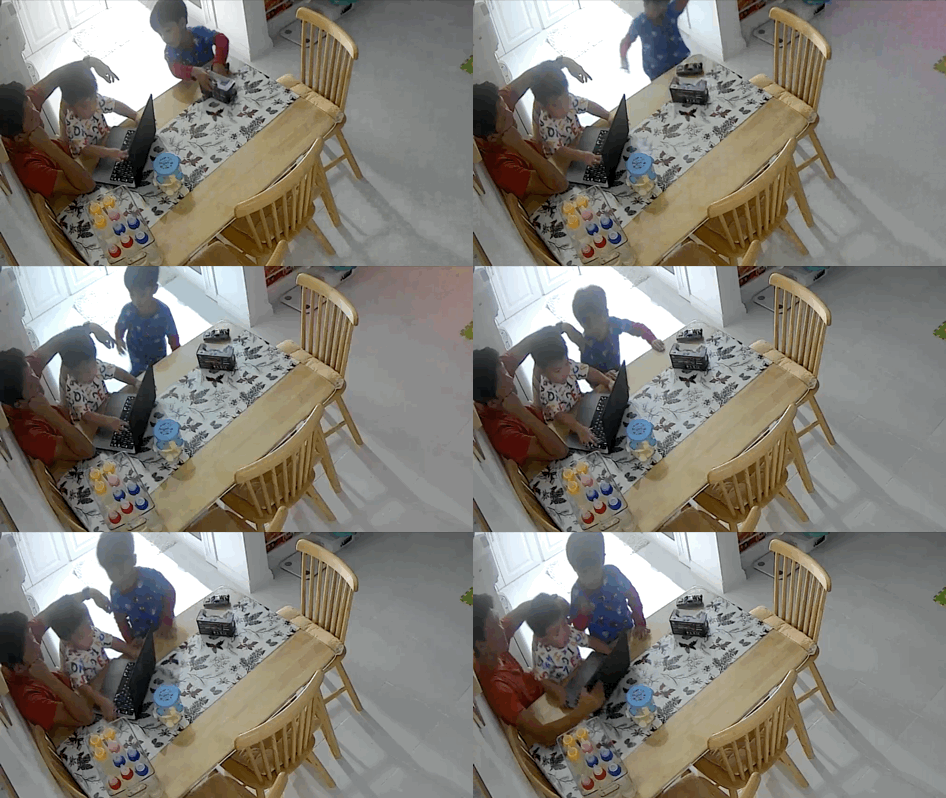
What happens when I open my laptop at home

I used to think that I needed a separate workspace because working from home was challenging due to my kids. They would close my laptop, type on it, and constantly demand my attention, making it difficult to work.

While it’s partially true, I realized that it’s not the main reason. 

My main reason for needing a separate workspace is rooted in my values that family comes first. Given the choice between working and attending to my kids, prioritizing my kids is a no-brainer. Whenever they are around, it’s tough choosing anything else because I know that it’s not forever that they’d want me around. I just got to enjoy it while they do.

I still have to work though. Being physically away from my kids allows me to do my job and be able to provide.

It’s a small nuance, but the end result is still the same — I have to be away working.

This is more on resolving an internal conflict when I have to work long hours. There are instances I question myself “Akala ko ba priority family? Ba’t puro ako trabaho?”. Now, I have a clear answer.

Working in 2-hour blocks

/ Work /

Ever since two of our kids started school at different schools with different schedules, I’ve been trying to figure out a way to still effectively work.

Here’s what I’m trying to follow:

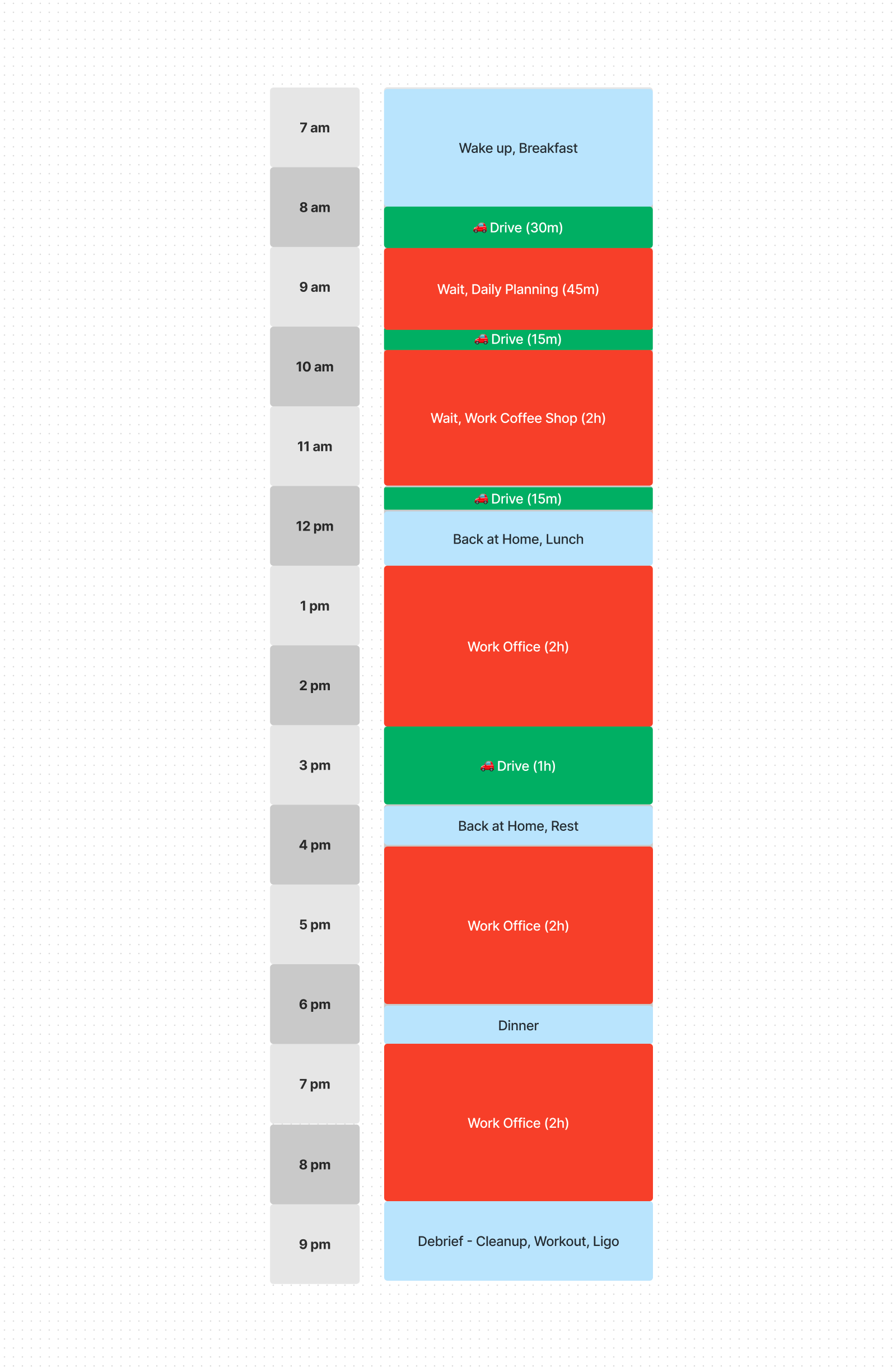
My goal is to have an 8-hour workday. I divide this to four 2-hour blocks.

Daily Planning

In daily planning, I try to be specific with what I want to accomplish on each block. Once that’s clear, I try to do tasks that takes less than 5-minute to do if I have the energy (most of the time I don’t and procrastinate 😛).

Operations Work

The initial 2-hour block mostly involves handling operational tasks for Human Made. During this period, I address change requests, support tickets, and emails. This works well because I’m usually the only person available around this hour. I can respond faster to our APAC customers.

It’s also good for me as it puts my head in to work mode.

Sprint Work / Meetings

In the following 2-hour blocks, the tasks are mixed bag. Sometimes more support work if there’s an active incident happening, sometimes I’m able to focus on sprint work.

Working in the evening enables me to participate in meetings with my team. This timing works well as those in the EMEA region are in their mid-day, and those in the Americas are just starting their day.

-

This schedule is not something I can consistently follow. Some days, completing even a single task is a struggle, while on other days, I effortlessly breeze through my to-do list. It’s a give-and-take scenario. When I’m struggling, I spend more time to work to still deliver, and during good periods, I spend more time at home. It’s a recurring cycle.

I think plans isn’t meant to be followed to the dot but rather to provide guidance and structure. Having things pre-decided makes it easy to get back on track when I feel lost.

Showing 4 of 10 posts